
I design products, the services around them, and the systems that make both hold.
Hands-on product designer with enterprise design-systems experience at T-Mobile and a 0→1 service I shipped end to end. My most recent work treats AI as an architecture decision rather than a shortcut: where it belongs while you're designing a product, and where it belongs once you've shipped it.
Product Designer · Service Designer · MBA · 📍 California
The work
SELECTED WORK
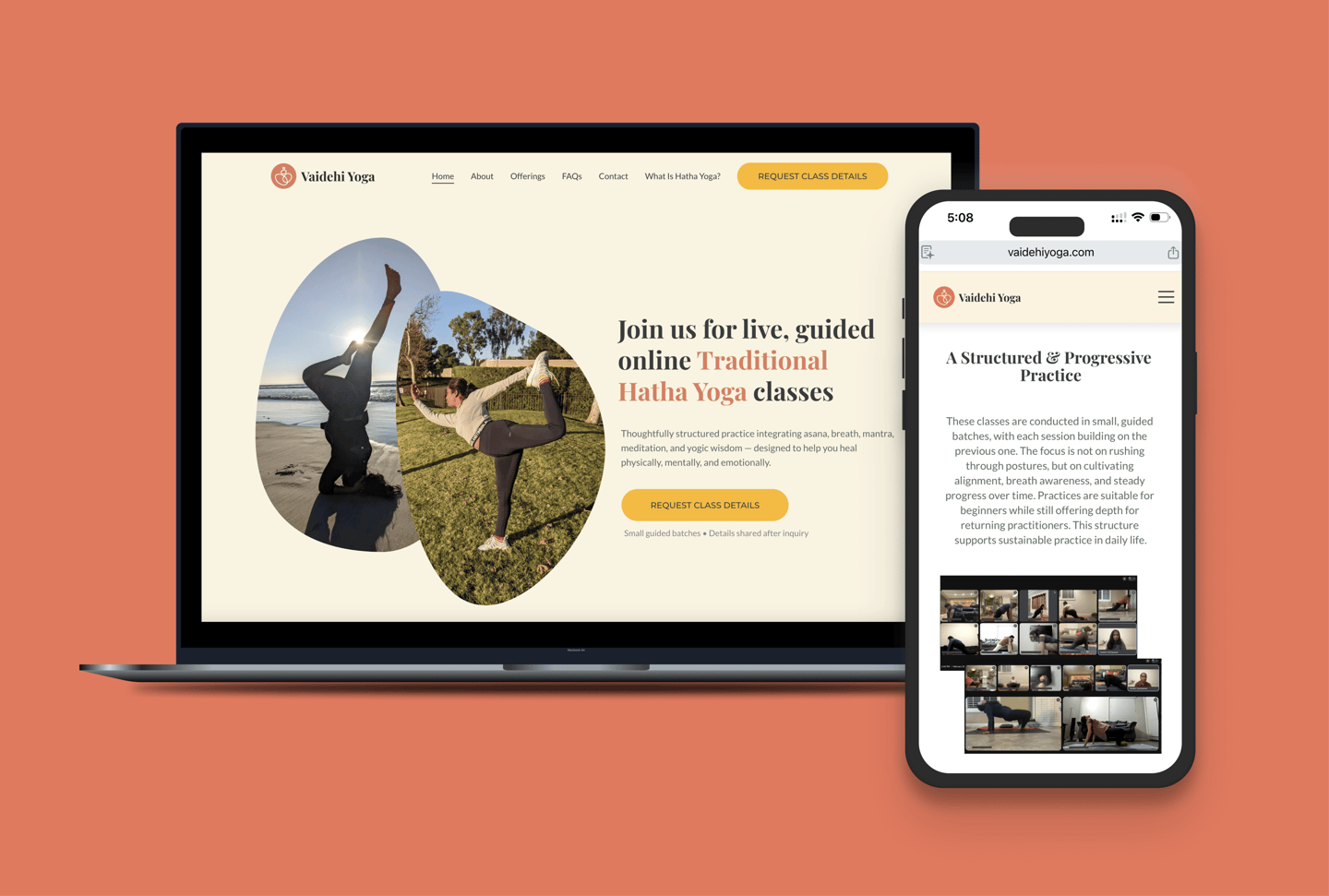
Service · Founder & sole designer · 2024-present
Vaidehi Yoga: Designing a service system for a live practice
Three case studies, one for each claim in the thesis: the system, the service, the product.
Onboarding friction cut 50–60% through restructured flows and IA
Free → paying customers in 2 months; 5–6 month average retention
Strategy, pricing, and positioning calls owned end to end, and measured
→
→
→
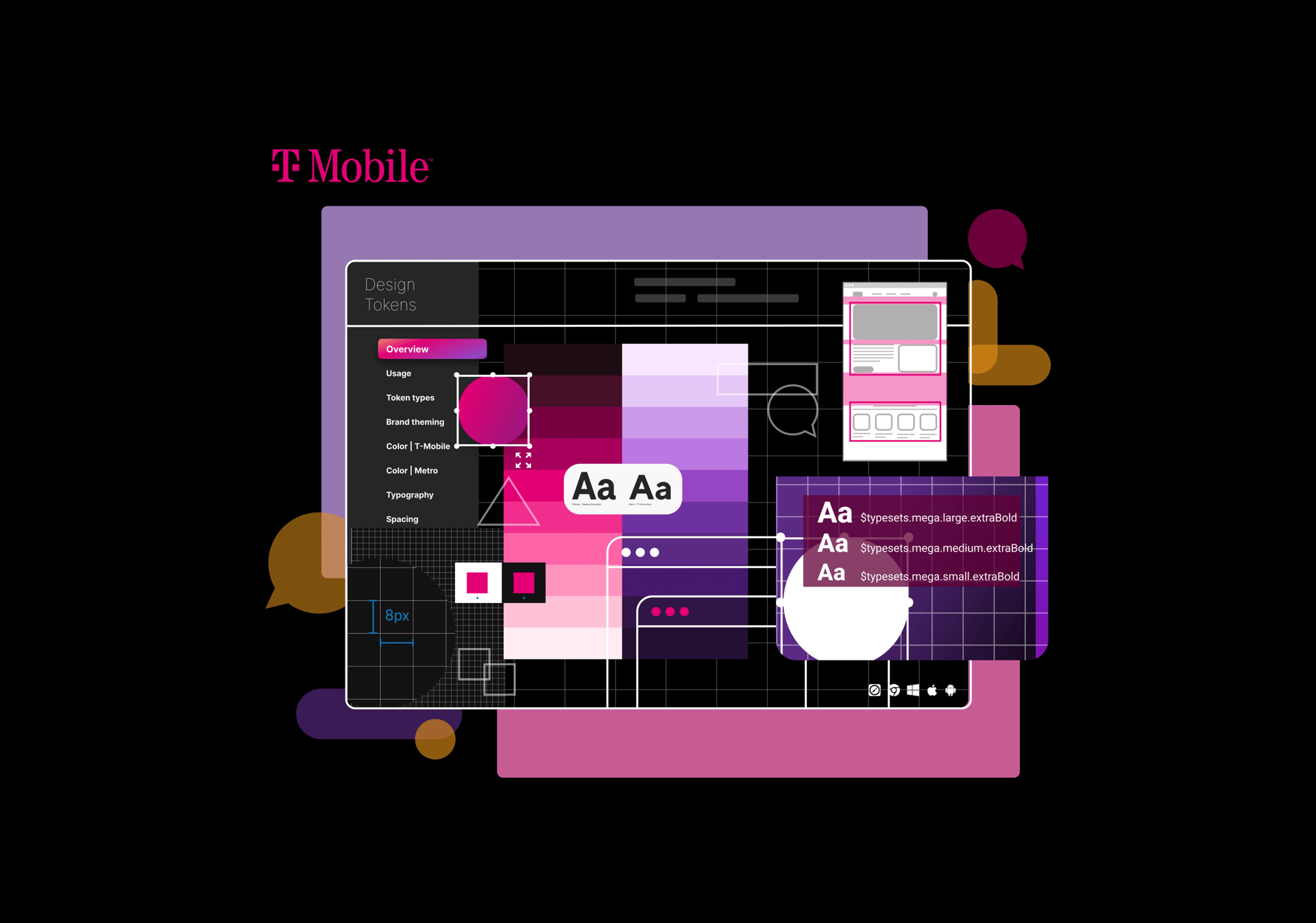
SYSTEMS · UX Designer II · T-Mobile · 2022–2023
Apeiron Design System: Component architecture for enterprise scale
T-Mobile's first unified cross-platform design system, consolidating three legacy systems into one. I led UX research and documentation: purpose, usage guidelines, WCAG 2.2 specs, and cross-platform definitions for core components written so developers can build without a designer in the room.
85% of designers building consistent experiences across platforms
3 legacy systems → 1, with design tokens enabling single-source updates
Developer-ready documentation delivered in Figma and Storybook
→
→
→
Earlier enterprise work
Starting as a business analyst before moving into design is where the systems habit came from, seeing how the structure behind a product decides what the interface can even be.
An end-to-end service I designed from the ground up, spanning research, service blueprinting, onboarding, and the live class experience. Every decision was traced to a specific finding across 15+ competitive services and tested through real user retention and engagement.


PRODUCT & AI SYSTEM · Product Designer · 2026
Threadwise: Designing with three AI models, shipping with zero
A concept product that tells a shopper whether a garment is worth buying, based on its fabric. I froze a seven-document brief, ran it through three AI models in parallel, then curated a hybrid from the strongest parts of each — and specified an architecture where the expensive reasoning happens once at build time, never on a user's request.
Zero runtime AI calls by design, the intelligence is frozen at build time, making every answer instant, private, and auditable
3 models, 1 identical brief, scored against 12 evaluation criteria before anything was chosen
7 foundation documents written and frozen before a single interface was drawn
→
→
→
Six years of shipped product design and business analysis at Tata Consultancy Services and Polaris, across digital banking, HR, IT, and IoT. The pattern was consistent: find the friction, restructure the system, measure the result. Client work under NDA, so the outcomes are shown rather than the screens.
Two questions, not one.
How I use AI
The tooling changed the speed of the work. It didn't change who has to make the decisions, the judgment, the craft, and the accountability stay with me.
Most conversations about AI in design are about speed. Speed is the least interesting thing AI changed about my work. The questions I actually care about are where AI belongs while you're designing a product, and where it belongs after you've shipped it and they have different answers.
See it in practice
Threadwise is this thinking built end to end: one frozen brief, three models compared on 12 criteria, a human-curated hybrid, and a specified architecture that makes zero AI calls at runtime. The case study ends with what the experiment actually taught me.
How I think
APPROACH
About
I've designed inside a 500,000-person enterprise and as a company of one. Both taught the same lesson: products fail at the seams: between teams, between touchpoints, between what was promised and what was delivered.
My path runs from business analysis at TCS, through product design across HR, banking, and IoT, to T-Mobile's unified design system, to an MBA in entrepreneurship and strategic innovation, and then to founding a wellness service where I was the designer, the operator, and the person accountable for every outcome.
Outside of product work, I'm a certified yoga teacher who runs live classes. Teaching is a daily masterclass in the thing design needs most: making something complex feel simple, calm, and worth coming back to.
Founder & UX/Service Designer
UX Designer II, Design Systems
Product Designer
Business Analyst
MBA, Entrepreneurship & Strategic Innovation
Google UX Design Professional Certificate
Vaidehi Yoga · 2024–now
T-Mobile · 2022–23
TCS · 2018–21
TCS & Polaris · 2015–18
UIUC · GPA 3.88
get in touch
If you're hiring a product designer who finds the structure under the problem and ships work that holds, let's talk.
© 2026 Vaidehi Yelkawar